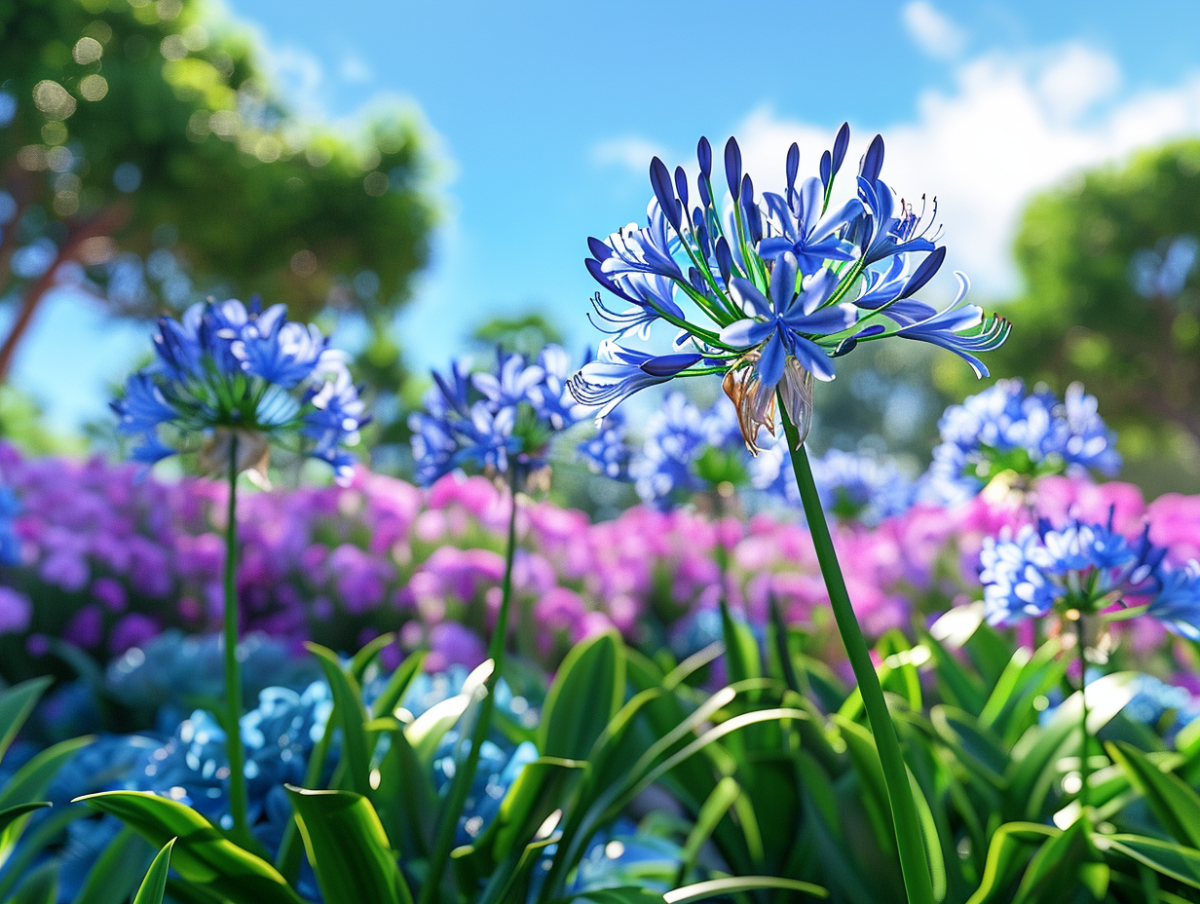
Agapanthuses, with their majestic flowers resembling azure bells, are jewels of gardens that captivate lovers of spectacular blooms. However, behind their robust appearance lie specific needs that are essential for their flourishing. An optimal bloom of these plants, native to South Africa, is not a matter of chance but results from attentive care. This involves understanding key elements such as soil choice, watering, fertilization, and managing rest periods. Mastering these aspects is fundamental to encourage agapanthuses to display their sumptuous corollas year after year.
Preparation and Initial Care for Healthy Growth of Agapanthuses
Agapanthuses, these graceful trumpet-shaped flowers, require specific maintenance to achieve optimal blooming. From the moment of planting, ensure to select a sunny location, as light is essential for their development. The soil pH should be slightly acidic to neutral, a prerequisite for these perennial plants to thrive. Well-drained soil enriched with compost will promote vigorous growth. The question often arises: Should the leaves of agapanthuses be cut? The answer is nuanced. For deciduous varieties, pruning after flowering encourages the plant to focus its energy on the roots, while for evergreen varieties, pruning is not necessary unless removing damaged or dried leaves.
Fertilization is another pillar of success for these plants. Providing nutrients during the growing season stimulates the formation of flower stalks. Prefer fertilizers rich in potassium to support this process. As for watering, it should be balanced: regular and moderate during the growing season, then reduced once the plant enters dormancy. This water management is crucial to avoid excesses that could lead to root rot.
Division and transplantation are essential practices to maintain the vigor of agapanthuses. Division, to be done every three to four years, allows for regenerating clumps and encouraging blooming. Transplantation, on the other hand, is necessary when the plant seems cramped in its container or at its location in the garden. Follow these steps, and you will see your agapanthuses thrive with vibrant health and abundant blooms.
Maintenance and Protection of Agapanthuses for Abundant Blooming
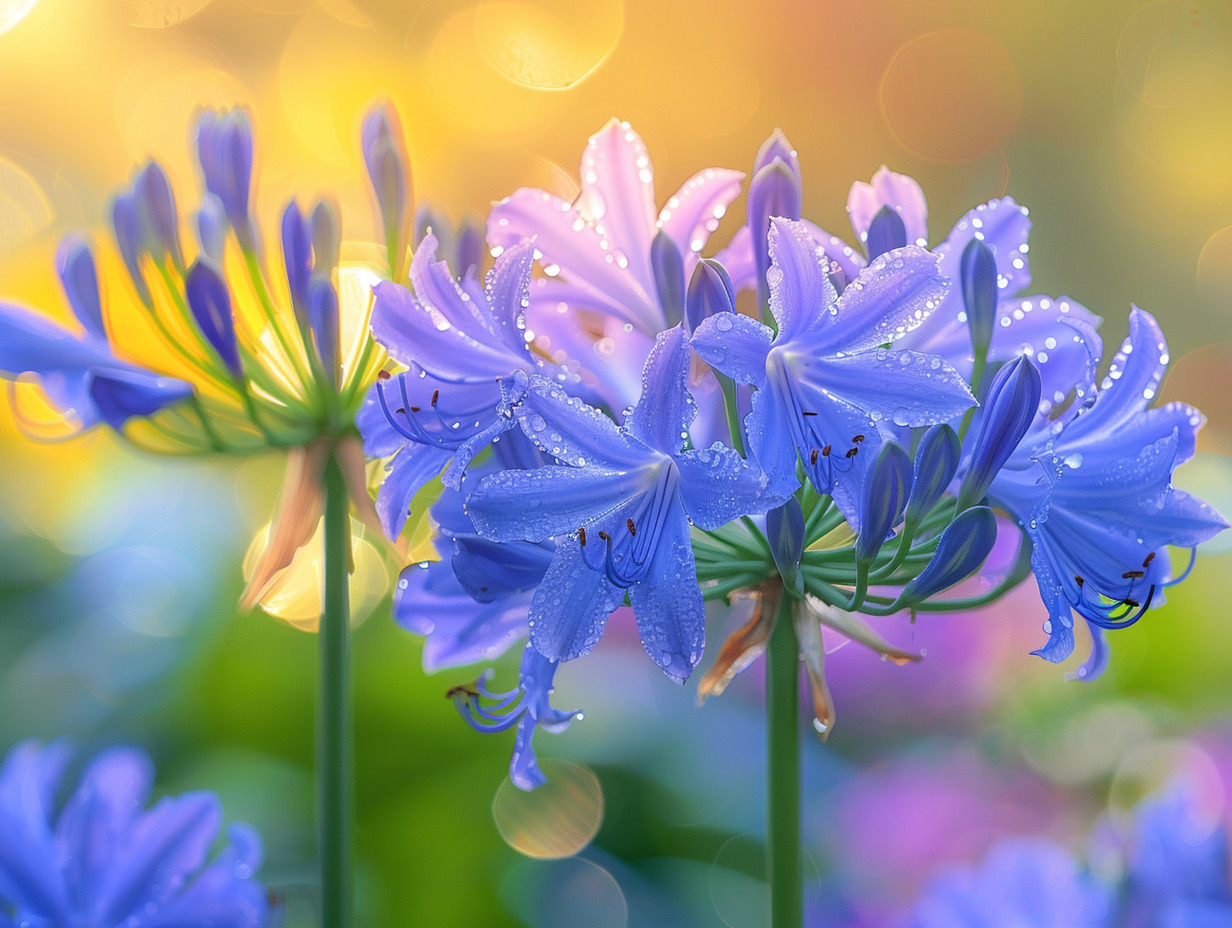
The abundant blooming of agapanthuses closely depends on meticulous maintenance and rigorous protection against seasonal threats. With the arrival of cooler temperatures, agapanthuses require adequate winter protection, especially in regions where the mercury drops significantly. Use winter covers or mulch the soil with fallen leaves or straw to protect the roots from frost.
The fight against weeds is a constant front to preserve the health of these plants. Regular weeding will prevent competition for essential resources such as light, water, and nutrients. Likewise, wilted flowers should be promptly cut to stimulate the growth of new flower buds, a key step in perpetuating blooming.
Pests and diseases pose potential threats to agapanthuses. Aphids, thrips, slugs, and snails are pests that attack the leaves and flowers, while root rot and powdery mildew compromise the vigor of the plants. A phytosanitary control, combining prevention and targeted interventions, is therefore essential to keep agapanthuses healthy.
Protection against cold temperatures is a measure that should not be overlooked. For less cold-resistant varieties of agapanthuses, consider pot cultivation to shelter them indoors during the winter. Follow these guidelines, and the agapanthuses will reward your efforts with a profusion of colors and shapes, beautifying balconies and terraces, and adding a touch of exoticism to the garden.