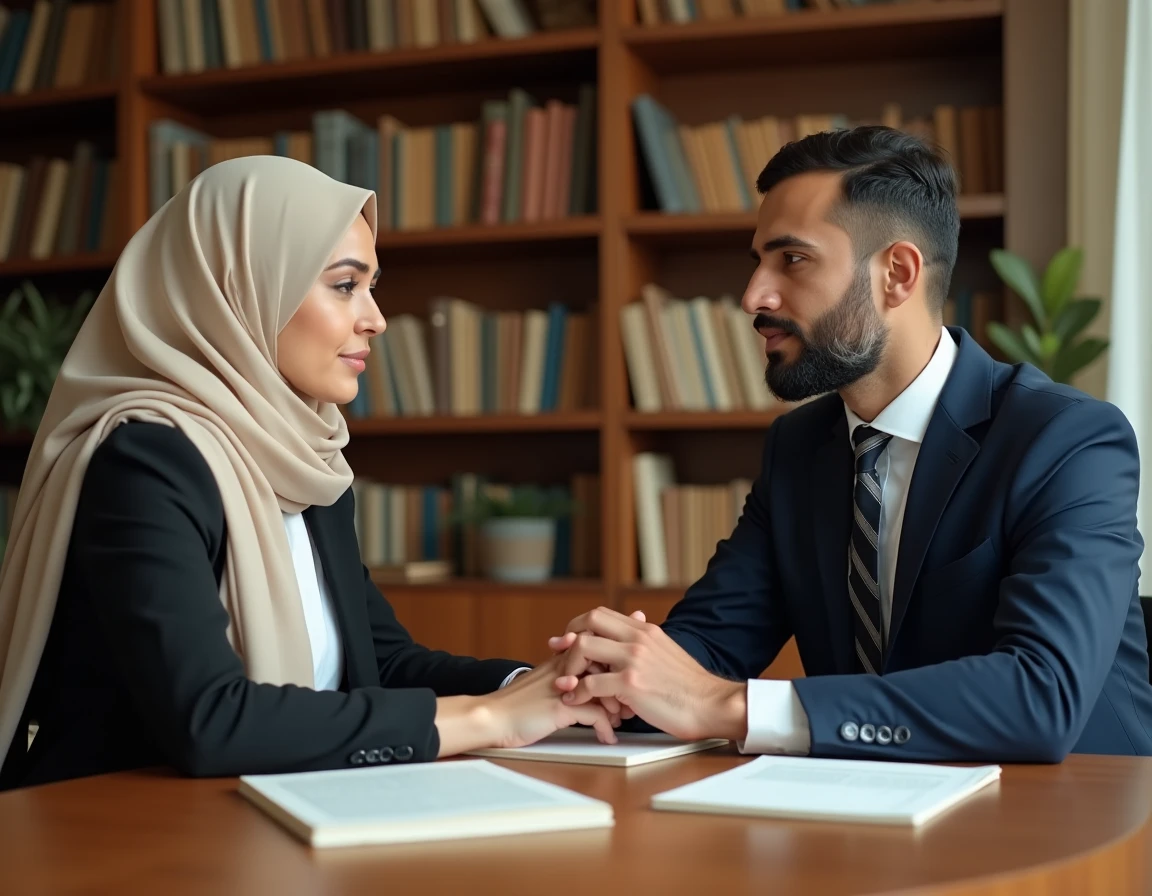
A couple separated by several thousand kilometers, a guardian in one country, witnesses in another: the question of long-distance marriage in Islam arises as soon as we move away from the classic scenario where everyone is in the same room. Before starting the process, we need to know precisely what makes this nikah valid from a religious standpoint and what weakens it from a civil perspective.
Nikah via video: what real-time transmission changes concretely
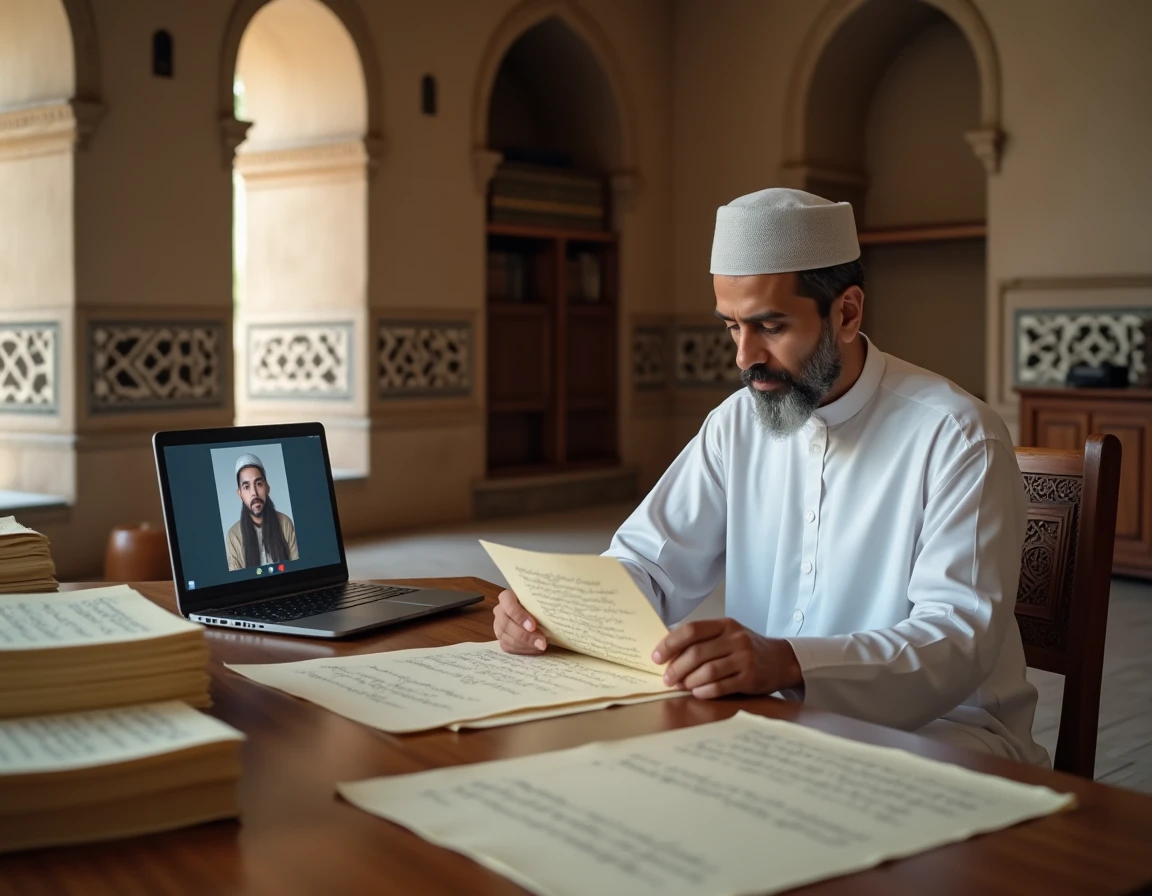
The starting point is the technical question. An Islamic marriage contract relies on a verbal exchange between two parties: the offer (ijab) and the acceptance (qabul). When this exchange takes place via Zoom, WhatsApp, or any other video conferencing tool, the speech must flow in real-time, without editing or delayed recording.
Several fatwa councils, particularly in Saudi Arabia and Jordan, have validated this possibility provided that the identification of the spouses is certain. We are indeed talking about a live video where each participant can see and hear the others, not a voice message sent the day before.
In practice, we find that the stability of the connection sometimes poses problems. If the sound cuts out at the moment of acceptance, doubt arises. The imams overseeing these ceremonies generally request a clear repetition of the formula and check with each party that the phrase has been heard. To better understand the rules of long-distance marriage in Islam, this distinction between live and recorded remains the first filter to apply.
Conditions for the validity of long-distance marriage in Islam: guardian, witnesses, and dowry
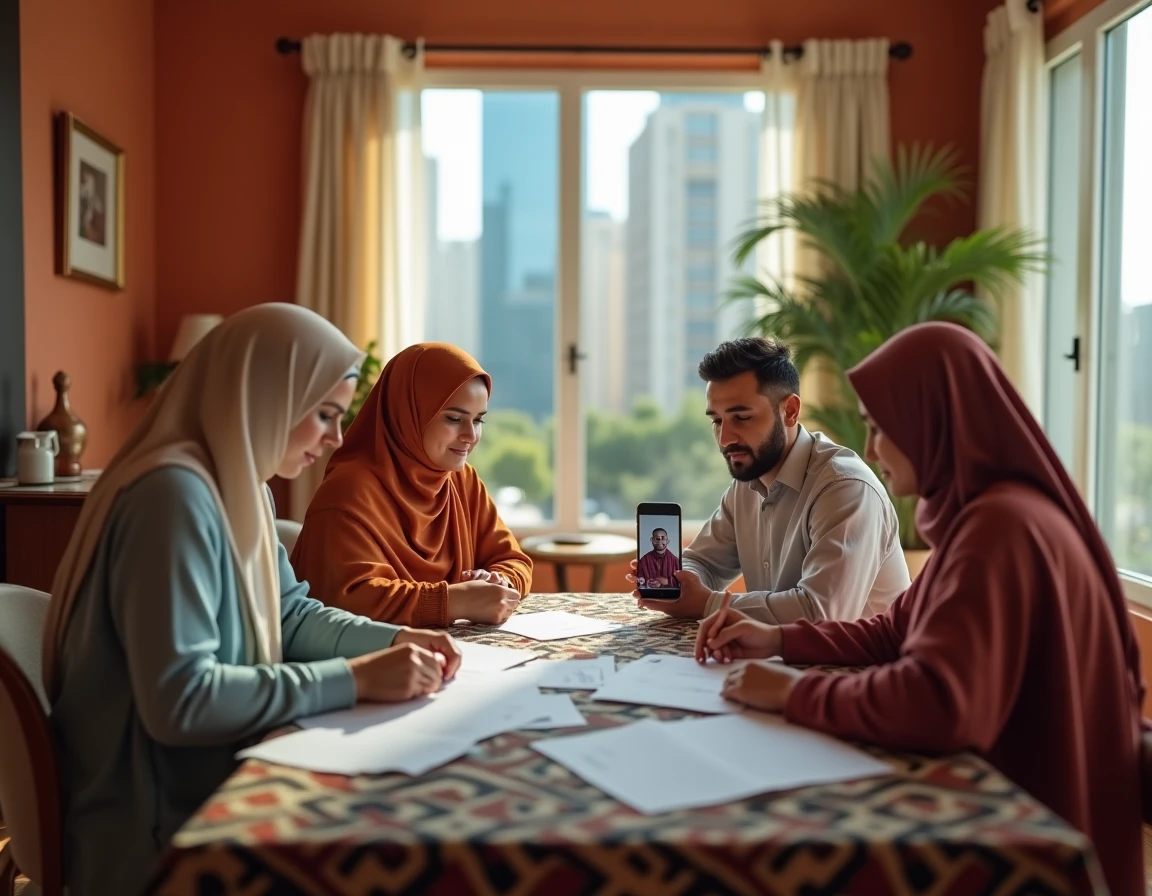
Long-distance marriage does not create new conditions. It complicates the application of existing conditions. The usual pillars of the nikah are present, but their implementation requires more rigor when the participants do not share the same location.
- The guardian (wali): the majority of scholars require his presence or, failing that, his representation by an agent (wakil). In a long-distance marriage, the guardian may be in another country. He must then give his consent in an explicit and verifiable manner, in front of the witnesses present on his side or via live video.
- At least two witnesses: they must witness the exchange of the offer and acceptance. Opinions differ on the location of the witnesses. Some scholars accept that they are distributed between the two locations, while others prefer that at least two witnesses be physically present on one spouse’s side.
- The dowry (mahr): it must be set and announced before or during the ceremony. Distance does not change this obligation, but payment can be deferred if both parties agree in the contract.
- The free consent of both spouses: the woman must clearly express her agreement. In video, this expression must be audible and visible to all participants.
A long-distance nikah that respects these four elements remains valid from a religious standpoint. The problem begins when we move to the administrative aspect.
The issue of the agent (wakil) when the groom is absent
In the most common case, it is the future groom who is abroad. The bride’s guardian then designates a wakil, or the groom himself appoints someone to pronounce the acceptance on his behalf. This mandate must be formalized in writing and signed in front of witnesses to avoid any subsequent disputes.
Feedback varies on the exact form of this power of attorney according to legal schools. Among the Hanafis, the procedure via wakil is well documented and widely practiced. Among the Malikis, there is a greater emphasis on the physical presence of the bride’s guardian.
Civil recognition of long-distance Islamic marriage: the real bottleneck
This is where many couples find themselves stuck. A nikah that is religiously valid does not automatically lead to legal recognition, neither in Muslim countries nor in France.
In several Muslim countries, civil authorities now require that any long-distance marriage be registered through specific procedures, such as family courts or official electronic registration platforms. Without this registration, the religious marriage has no legal value, even if the Islamic conditions are met.
Situation in France: no nikah without prior civil marriage
In France, the law requires a visit to the town hall before any religious ceremony. An imam who performs a nikah without the couple having first contracted a civil marriage is subject to sanctions. In practical terms, a long-distance marriage celebrated solely in front of an imam has no legal existence under French law.
For binational couples, the usual process is to carry out the civil marriage in the country of residence of one of the spouses, then to organize the nikah (in person or remotely). The transcription of the marriage certificate with the consulate is then essential for the foreign spouse to initiate a family reunification or visa procedure.
Concrete precautions before celebrating a long-distance nikah
Organizing a long-distance marriage without error requires anticipating both the religious and administrative aspects. Here are a few points to check before the ceremony:
- Contact an imam or recognized scholar who agrees to supervise the ceremony via video and who knows the requirements of the legal school followed by the couple.
- Prepare a written and signed power of attorney if a wakil represents one of the spouses, with a copy sent to the witnesses on both sides.
- Test the internet connection in advance to ensure smooth transmission without interruptions at the moment of the exchange of formulas.
- Record the ceremony (with everyone’s consent) as supplementary proof, while knowing that it is the live event that counts, not the recording.
- Initiate civil marriage procedures in parallel so that the union is recognized by the relevant authorities.
Long-distance marriage in Islam is neither a recent innovation nor a shortcut. It is an application of the same rules of the nikah contract in a context where geography complicates logistics. Religious validity depends on the classic conditions, correctly applied. Legal recognition, on the other hand, entirely depends on the civil procedures carried out in each relevant country.