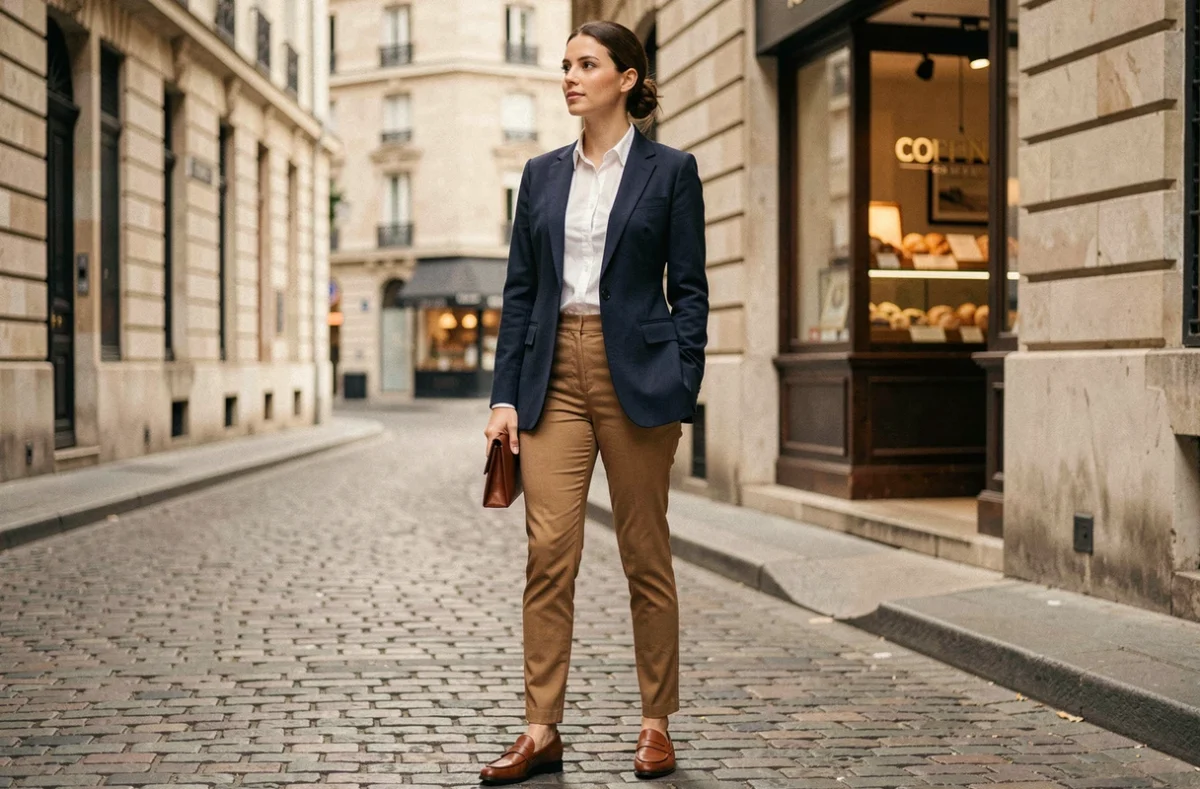
French fashion is based on very concrete constraints: limited budget, restricted wardrobe, changing climate. It is this economy of means that produces the elegance often associated with the French wardrobe.
Second-hand and French style: a structuring circuit
Before discussing cuts or colors, we must talk about sourcing. The French second-hand market grew faster than the new market in 2025, both in volume and value, according to data from Refashion. It is no longer a backup circuit reserved for students or vintage enthusiasts.
What changes the game for everyday style is the availability of quality pieces at reduced prices. A wool trench found in a physical thrift store replaces an entry-level new model, often with a superior drape. The market remains largely physical: boutiques, consignment shops, and flea markets still represent the majority of volumes compared to digital platforms.
However, Refashion specifies that the environmental benefit of second-hand depends on one condition: that it actually replaces a new purchase rather than adding to it. Buying ten second-hand pieces in addition to an existing wardrobe produces neither savings nor style coherence.
This is a point rarely addressed, as it challenges the idea that buying cheaper automatically means consuming better. This approach can be found on alafrancaisetoujourschic.fr, which discusses the French wardrobe from the perspective of the durability of pieces.
Building an outfit the French way: concrete trade-offs
We often hear that we should focus on basics. The advice is correct, but unusable as is. The real question on the ground is: which basics, in what materials, and with what budget?
Materials and longevity
A fine cotton t-shirt loses its shape after a few washes. A denser cotton t-shirt, with a well-finished ribbed collar, lasts several seasons. The longevity of a piece is reflected in its finishes, not in its displayed price. One should check the seams, the consistency of the fabric, and the flexibility of the collar.
For structural pieces (blazer, tailored pants, straight dress), we prioritize materials that do not pill and that maintain their shape: blended wool, crepe, gabardine. These choices are not primarily aesthetic; they are practical.
Colors: a limited palette as a tool
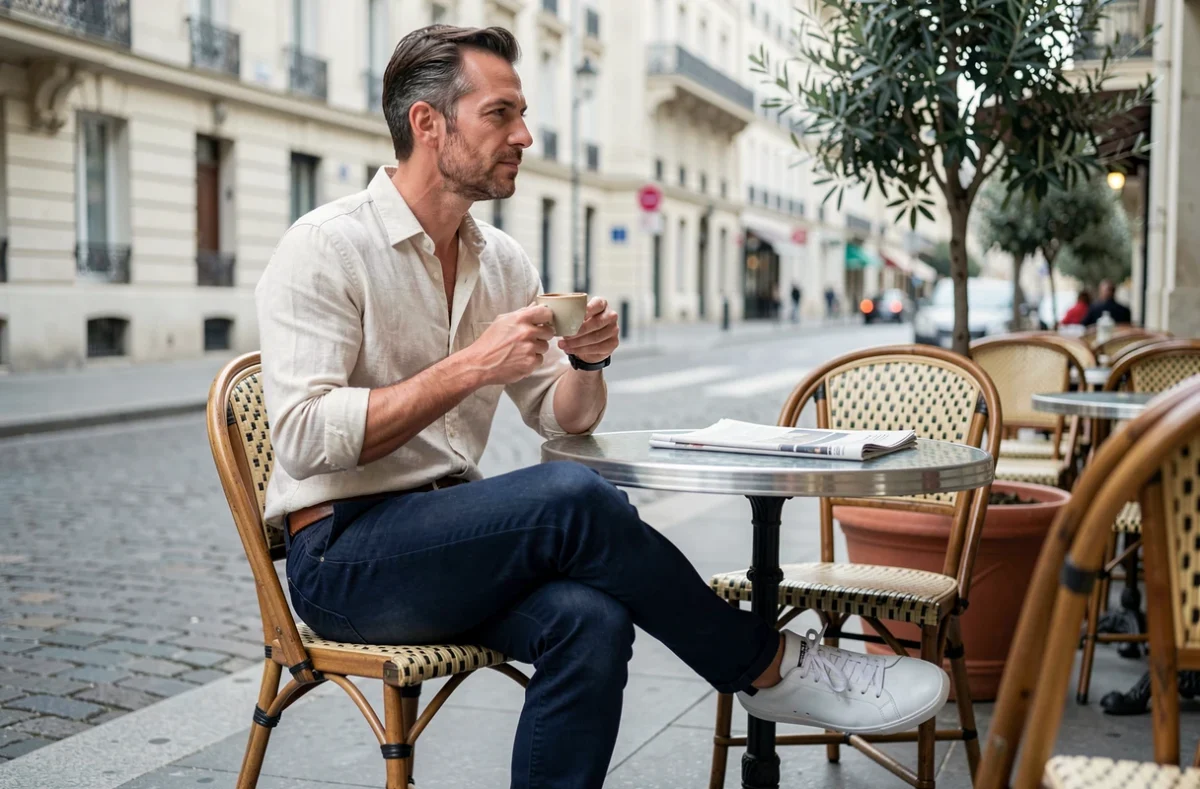
The French wardrobe often operates on a basis of three or four colors at most. This is not minimalism by philosophy; it is a tool for interchangeability.
- A neutral base (black, navy, gray, beige) allows for combining all bottom pieces with all top pieces without thinking for twenty minutes in the morning.
- One or two accent colors (burgundy, pine green, terracotta) add depth without complicating combinations.
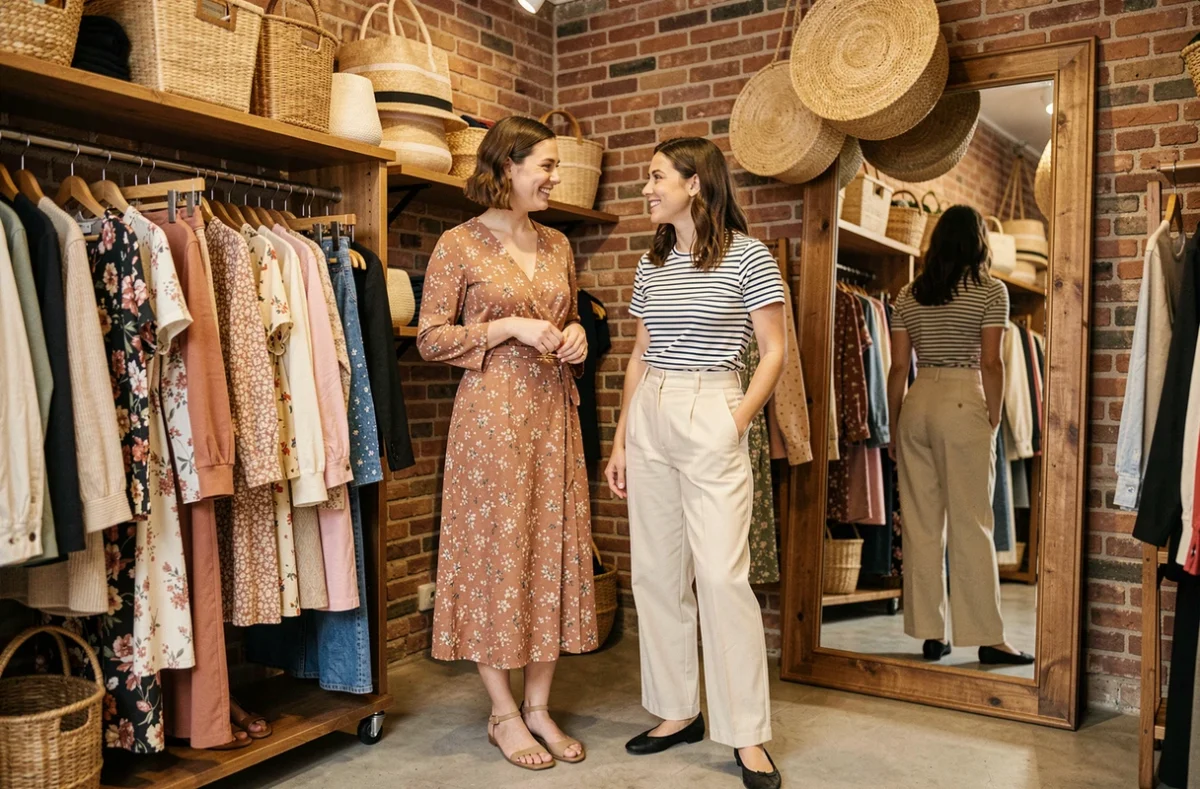
- Prints are limited to one per outfit to avoid visual conflicts, with stripes being the most versatile.
This system reduces the number of necessary garments. This is where elegance meets budget constraint: fewer pieces, better chosen, combined more easily.
Fashion regulation in France: what is changing for consumers
French regulation now directly targets ultra-fast fashion, according to an analysis published by Jones Day in September 2026. The proposed measures could alter prices, brand communication, and the frequency of collection renewals.
In practical terms, this means that very low-priced pieces imported in bulk could become more expensive or disappear from certain circuits. For those building a sustainable wardrobe, this is rather a favorable signal: brands investing in eco-design are gaining competitiveness. Refashion notes that declarations benefiting from eco-modulation have significantly increased recently.
Opinions vary on this point, but the direction is clear: the regulatory framework pushes towards less frequent purchases and pieces designed to last. The French style, historically associated with the longevity of clothing, is reinforced by this context.
Parisian allure every day: what makes the difference on the ground
One can apply all the rules of colors and materials and still miss the allure. The often overlooked factor is fit.
A jacket that is too long in the sleeves negates the effect of a well-thought-out cut. Pants with hems dragging on the ground immediately degrade the silhouette. Having a piece tailored costs a few euros and transforms the look. In practice, many French women have sleeves and hems adjusted as soon as they purchase a new piece.
The other concrete lever is maintenance. A blazer that is never pressed, leather that is not nourished, shoes that are not polished: these details are immediately noticeable. French chic relies less on the initial choice of the piece than on its upkeep over time.
- Brush wool coats after each wear to remove dust and fibers.
- Alternate leather shoes every other day to allow the material to breathe.
- Store knitwear folded, never on hangers, to avoid shoulder deformation.
These gestures require neither a budget nor particular expertise. They extend the lifespan of garments and preserve their shape, achieving the same result as buying more expensive items.
Quality of materials, coherence of colors, precise fit, and regular maintenance form the four pillars of this approach. The rise of second-hand and the tightening of regulations against fast fashion make it more accessible than before, provided that accumulation is replaced by selection.