Lavender produces a bouquet of volatile compounds, including linalool and linalyl acetate, which act as chemical signals on the nervous system of arthropods and some mammals. These molecules explain why this Mediterranean plant functions both as a magnet for pollinator species and as an olfactory barrier against pests. Understanding these mechanisms allows for placing lavender in the right spot in a garden or vegetable patch.
Linalool and linalyl acetate: the molecules that dictate attraction or repulsion
Before making lists of animals, it is essential to understand what is happening at the chemical level. Linalool, the main component of true lavender essential oil, interacts with the olfactory receptors of insects. In pollinators, it signals the presence of nectar. In houseflies and stable flies, this same compound triggers avoidance behavior.
Linalyl acetate complements the action of linalool. These two substances combined create an olfactory profile that some insects interpret as attractive while others find irritating. The concentration of linalool varies depending on the species of lavender: true lavender (Lavandula angustifolia) contains more than lavandin, a more productive hybrid with a different aromatic profile.
A rarely mentioned point in gardening guides: the repulsive action heavily depends on the flowering stage and planting density. An isolated potted plant will have a much lesser effect than a dense border in full bloom. This aspect is crucial for anyone looking to identify the insects attracted to or repelled by lavender in a real garden context.
Pollinators attracted by lavender: bees, bumblebees, and butterflies
Lavender ranks among the most visited nectar plants in urban gardens, more so than many other ornamental perennials. Its long flowering period, generally extending from June to September depending on the regions, ensures a source of nectar for several months.
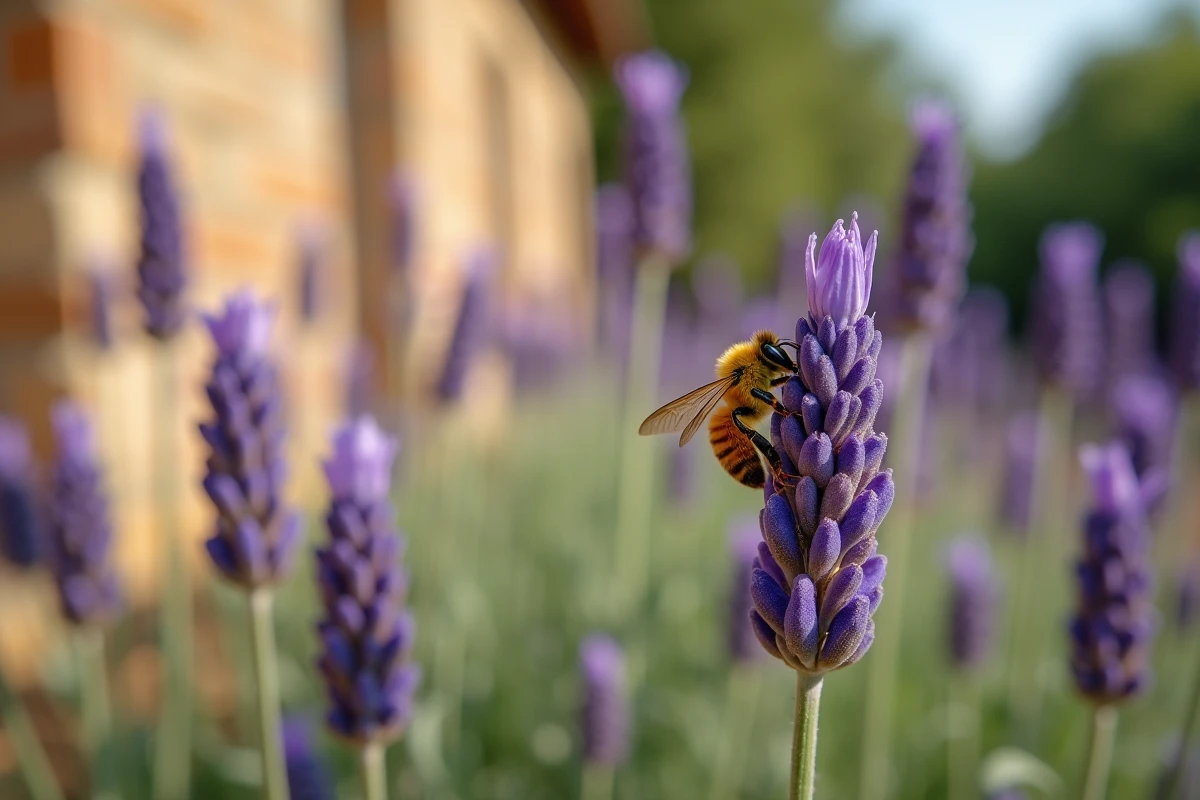
Honeybees are the most diligent visitors. Wild bees (osmias, andrenids) also frequent lavender beds with notable regularity. Bumblebees, less sensitive to cool morning temperatures, begin foraging on lavender spikes earlier in the day than bees.
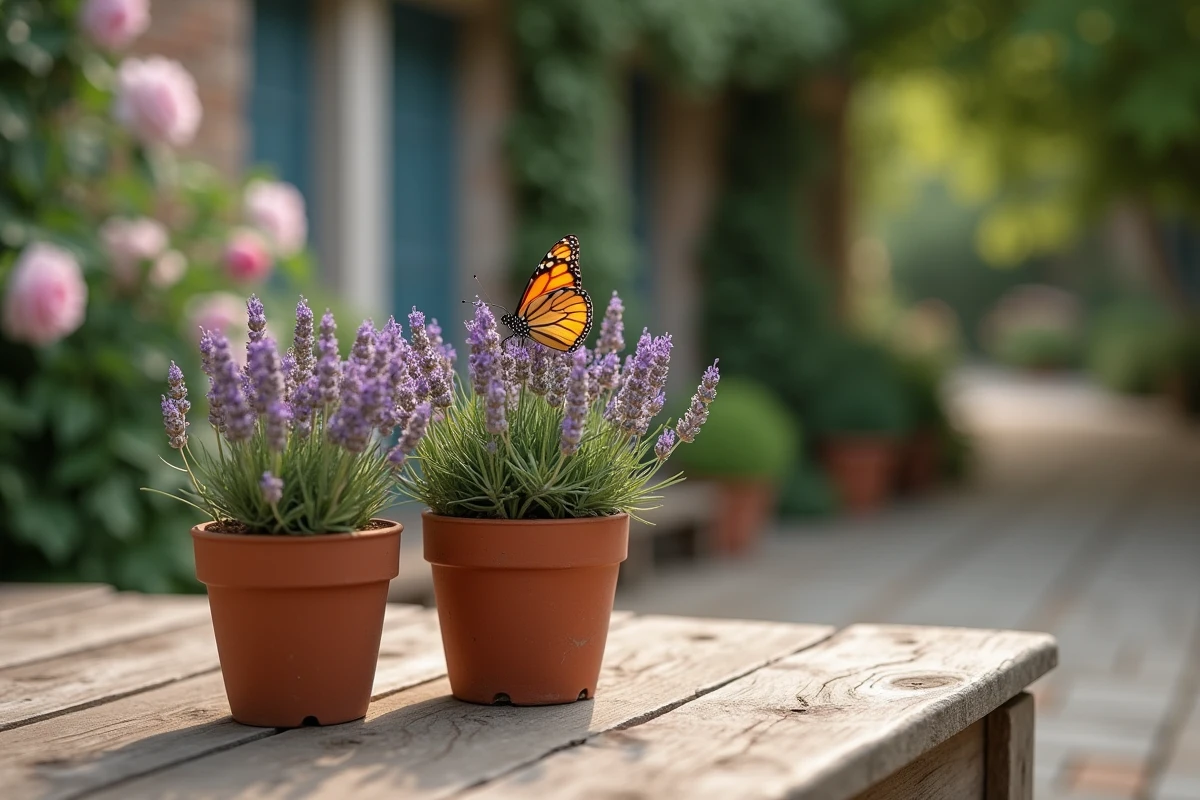
Daytime butterflies, particularly pierids and admirals, land on the inflorescences to sip nectar using their proboscis. Syrphids, those yellow and black striped flies often mistaken for wasps, complete the picture. Syrphids are doubly useful: their larvae consume aphids on neighboring crops.
- Honeybees and wild bees: main visitors, attracted by linalool as a signal of abundant nectar.
- Bumblebees: early foraging during the day, even in cool or overcast weather.
- Daytime butterflies (pierids, admirals): attracted by the purple color as much as by the fragrance.
- Syrphids: pollinators in the adult stage, aphid predators in the larval stage.
Insects and pests repelled by the scent of lavender
Linalool disrupts the olfactory receptors of several pest species. Houseflies and stable flies are among the insects whose avoidance behavior towards lavender is documented. This effect explains the traditional use of dried lavender bouquets by windows or in stables.
Mosquitoes also react to the scent of lavender, although the intensity of the repulsion depends on the concentration of essential oil. A lavender plant in the garden does not replace a mosquito repellent on the skin, but a dense hedge near a terrace reduces the pressure from these dipterans.
Clothes moths (Tineola bisselliella) are classic targets of indoor lavender. Sachets of dried flowers placed in wardrobes disrupt the laying of these moths. Ants, on the other hand, tend to avoid areas heavily scented with lavender, although the effect is not as drastic as that of a chemical product.
Aphids and whiteflies at the edges of crops
Observations in crop protection indicate that lavender planted at the edges of plots reduces populations of aphids and whiteflies on neighboring plants. The explanation is twofold: the scent of lavender masks the chemical signals emitted by cultivated plants, and the presence of syrphids attracted by lavender increases predation on pests.
This border action, however, depends on the flowering stage. Before and after flowering, the repulsive effect drops significantly. Planting varieties with staggered flowering (true lavender followed by lavandin) extends the protection.
Mammals and lavender: cats, rodents, deer
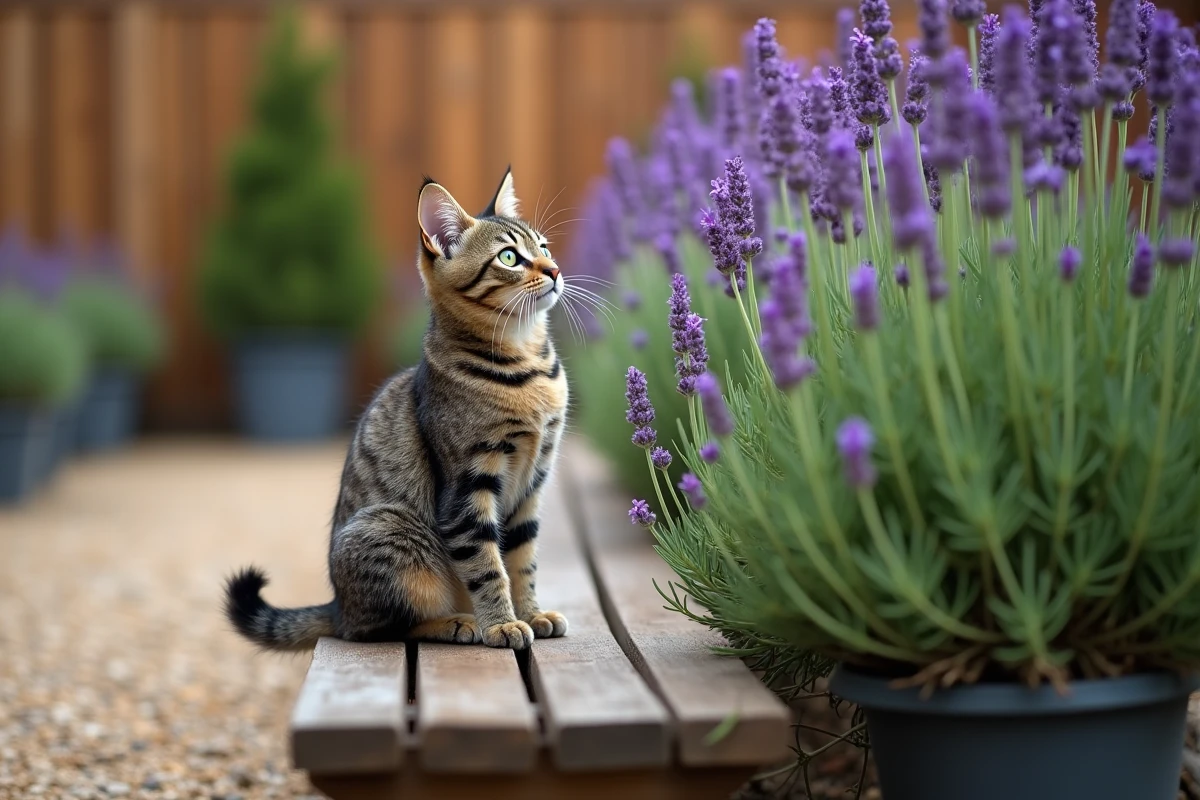
The effect of lavender on mammals is more nuanced than on insects. Cats show variable reactions: most avoid lavender plants, but some individuals seem indifferent or even attracted to rubbing against the stems. The nepetalactone in catnip and the linalool in lavender act on different receptors, which explains these contradictory responses.
Rodents (mice, rats) are often cited as being repelled by lavender. However, gardeners’ reports go both ways. Observations in Australia have documented rodents feeding directly on lavender leaves and stems. The repulsion is therefore not systematic and likely depends on the species of rodent and the availability of other food sources.
- Cats: variable reaction depending on the individual, mostly avoidance but no guaranteed effect.
- Mice and rats: partial repulsion, circumvented if food pressure is high.
- Deer and cervids: tendency to avoid lavender plants in the garden, likely due to the bitterness of the leaves combined with the scent.
Lavender in beekeeping: an underappreciated use against Varroa destructor
Beyond the garden, true lavender essential oil finds use in beekeeping. Feedback from beekeepers indicates that it is sometimes used as an olfactory adjuvant in the fight against the Varroa destructor mite, a major parasite of bee colonies. Linalool would slightly disrupt the mites while remaining well tolerated by the bees themselves.
This use remains complementary and does not replace primary treatments (oxalic acid, thymol). However, it illustrates the remarkable selectivity of lavender: repulsive to a parasitic mite, attractive to its host, the bee.
Lavender thus acts as a selective olfactory filter. Its ability to attract pollinators while discouraging flies, moths, and aphids makes it a key ally for structuring a garden or a vegetable patch border. The determining factor remains planting density and maintaining a flowering period spread throughout the season.