
The women’s hat transcends eras without losing relevance. Fashion accessory, cultural marker, sun protection: the reasons that drive women to wear hats overlap and vary depending on the context. This article compares the main motivations, their relative weight in clothing choices, and the gaps between generations or occasions.
Women’s hats on social media: a measurable purchasing lever
Competing articles approach the hat from the angle of elegance or sun protection. They overlook a more recent phenomenon: the role of visual platforms in the massive adoption of this accessory among young women.
According to the TikTok Fashion Pathways report published by TikTok and Publicis Media in 2023, accessories that are easily identifiable in photos or videos (including hats) are among the categories most likely to trigger impulse purchases among 18-34 year olds. The hat ticks all the boxes: recognizable silhouette, immediate personality, strong visual value in a short format.
This observation aligns with WGSN’s analysis in its Spring 2023 Macro Trends report, which classifies structured hats (rigid bucket hats, raffia bobs, soft fedoras) among the signature pieces of the women’s wardrobe on Instagram and TikTok. The hat is no longer an accessory that one “dares” to wear: it is a style element that is actively sought after, often after being spotted in video content.
As detailed by the site lamodeurbaine.fr for women, this dynamic is part of a broader trend of the rise of visible accessories in women’s fashion.

Styles of women’s hats and occasions: comparative table
Not all hat styles meet the same needs. The choice depends on the occasion, the level of formality, and the degree of protection sought. The table below summarizes the most worn models and their main uses.
| Hat Style | Main Occasion | Sun Protection | Style Signal |
|---|---|---|---|
| Straw wide-brimmed hat | Beach, vacation, garden party | High (wide brims) | Bohemian, romantic |
| Soft fedora | Urban daily, outings | Moderate | Assertive, contemporary |
| Raffia bucket hat | Festival, weekend, streetwear | Moderate | Casual, trendy |
| Boater | Ceremony, wedding, summer event | Low to moderate | Classic, retro |
| Cap | Sport, daily, casual look | Partial (visor) | Sporty, minimalist |
The fedora and bucket hat dominate online searches among those under 35, driven by their strong presence on social media. In contrast, the wide-brimmed hat and boater remain associated with formal events and dressy outfits, often appealing to an older clientele.
Hat and personality: what the choice of model reveals
Wearing a hat is not just a practical gesture. The chosen model functions as a silent language of personality. A woman who opts for a dark felt fedora does not communicate the same message as another wearing a colorful lightweight cotton bucket hat.
Culture plays a structuring role. In British weddings, the hat is an integral part of the women’s dress code. In France, the accessory has long been perceived as reserved for special occasions before making a comeback in daily wear. This return is partly explained by the rise of style as a vector of individual affirmation, where each visible accessory reinforces a chosen image.
The WGSN report notes that structured hats have become “key statement accessories” for young women. The term “statement” is central: it is less about following a trend than about making a visible, readable, and deliberate choice.
The three most common motivations
- Protection against the sun and UVs, with effectiveness varying according to the width of the brims and the density of the weave (dense felt, tight straw, thick cotton provide the best barriers)
- The affirmation of a recognizable personal style, the hat being one of the few accessories capable of transforming an entire outfit into a single piece
- The immediate boost in confidence provided by a structuring accessory, which alters the silhouette and draws attention to the face
Women’s fashion and hats: generational gap
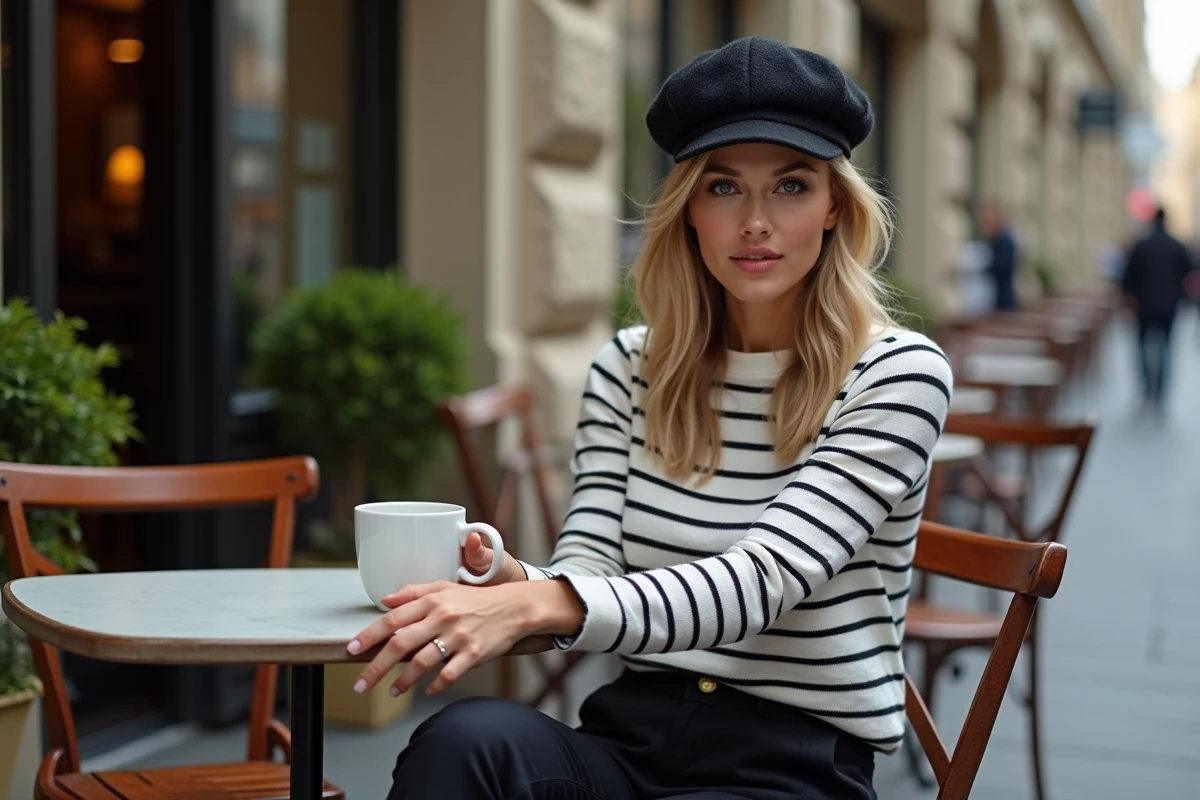
Trend analysis shows a clear gap between two profiles of wearers. Women under 35 adopt the hat as an extension of their digital identity. The choice of model is often guided by its “photogenicity”: a hat that looks good in photos sells better. The bucket hat and soft fedora dominate this segment.
For women over 45, the motivation is more related to the occasion (ceremony, wedding, summer outing) and sun protection. The hat remains a sporadic accessory, not a daily wardrobe element. The straw wide-brimmed hat and boater concentrate the majority of choices in this age group.
In contrast, the raffia bucket hat blurs generational boundaries. Worn by both students and more mature women, it benefits from a positioning that is both casual and high-quality, allowing it to cross age categories.
Choosing a quality hat: the criteria that matter
The material determines both comfort, durability, and level of protection. Dense felt or tight straw blocks the majority of UV rays. Fine cotton or low-quality synthetic materials allow a significant portion of radiation to pass through.
- The fabric weight: a tight weave provides better protection and lasts longer than a loose weave, regardless of the material
- The rigidity of the shape: a structured hat retains its silhouette over time, whereas a model that is too soft deforms after a few uses
- The size of the brims: the wider the brims, the larger the protected area (face, neck, ears)
Red, natural beige, and black remain the most sought-after colors in online searches related to women’s hats. Red, in particular, acts as a marker of bold fashion that amplifies the “statement” effect of the hat.
The women’s hat is no longer a niche accessory reserved for horse races or formal weddings. WGSN data and purchasing trends on TikTok confirm a lasting shift towards everyday and identity use, driven by visual networks and the search for signature pieces in everyday wardrobes.