In France, certain perennial plants withstand both frost and drought, thus outsmarting the constraints of the climate. The associations of robust plants and evergreen shrubs help avoid the tedious renewal of flower beds each season.
A meticulous planning of bloom times makes it possible to have colors even in the middle of winter, contrary to popular belief. The balance between aesthetics and functionality relies on a few lesser-known principles, often overlooked in outdoor landscaping.
Why harmony is essential for an outdoor garden that is pleasant all year round
An outdoor garden that exudes harmony is never the result of chance. Behind every space where the eye moves smoothly, there is reflection: it all starts with a structure, an organization designed to withstand the seasons. Pathways, flower beds, ponds, terraces, or mineral corners compose the backbone of a welcoming, readable, and vibrant garden. It’s not just a matter of aesthetics: this architecture promotes biodiversity, facilitates movement, and allows visitors, both human and more discreet inhabitants, to claim the space.
To shape this diversity of atmospheres and functions, it is useful to distribute the spaces according to the main uses:
- A terrace that invites conversation and meals under the sky,
- A lawn for children’s games or moments of relaxation,
- A shaded relaxation area, ideal for reading or napping,
- A well-exposed vegetable garden to grow some flavors,
- Vegetal borders that outline the contours and guide the gaze.
This division, dictated by light, weather, and desires, also determines the choice of plants and ease of maintenance. Multiplying atmospheres means multiplying pleasures and adapting the garden to everyone’s rhythms, all year round.
A water feature or an insect hotel is not just a simple accessory: they attract a whole range of useful fauna, from hedgehogs to bees, which animate the garden throughout the seasons. The balance that then establishes itself, between beauty and utility, reveals the true richness of an outdoor space designed for the long term. Combining different textures, carefully selecting materials and species, ensures a decor in constant evolution, without ever falling into haphazard accumulation.
Resources such as https://www.atmospheredujardin.com/ offer a wealth of ideas for creating a garden where nature and human hands interact subtly. Harmony is never static: it is cultivated with every choice, every season, for a living outdoor garden, never fixed, where diversity reigns.
What tips for creating a balanced, beautiful, and functional space?
The first concrete step: draw a plan of your garden. Digital solutions like Sketchup, Kozikaza, Iscape, or Dessiner jardin open up a world of possibilities, facilitating the visualization of volumes, flows, and different uses. This preparation time allows for anticipating future needs, integrating living, resting, or activity areas, and avoiding approximations that make outdoor arrangements difficult to live with on a daily basis.
The choice of materials plays a fundamental role in creating an atmosphere. Depending on the desired tone, one can opt for wood, natural stone, gravel, or composite materials. A wooden terrace exudes warmth and conviviality, while a gravel path offers a more rustic look. Vegetal fences, in addition to their low maintenance needs, promote biodiversity while preserving privacy.
Furniture should not be chosen lightly: favoring solid, easy-to-move, durable, and understated pieces ensures an elegant garden without falling into overload. A well-integrated garden lounge enhances the space, extends the terrace, and invites enjoyment throughout the seasons.
Outdoor lighting, often underestimated, transforms the atmosphere as night falls. A few discreet markers to guide footsteps, targeted lighting on a remarkable tree, or a soft halo over the dining area: these attentions extend the moments spent outside and give a new dimension to the garden as natural light fades.
Think of usage first: a dining area sheltered from the wind, an outdoor kitchen, a shaded relaxation space… These are the details that make the outdoor space truly welcoming, easy to live in, and suitable for all seasons. Harmony arises from this ongoing dialogue between nature, mineral landscaping, and daily needs.

Plant palette, materials, and accessories: concrete inspirations for a garden alive in all seasons
A well-thought-out garden tells a story through the diversity of its plants, the alternation of textures, and the discreet yet significant presence of accessories. To achieve a lively and attractive space all year round, one must compose a plant palette suited to the climate and exposure. For example, camellias and hydrangeas thrive in the shade, while lavender and santolina enjoy sun-drenched corners. Climbing plants, such as passionflower, jasmine, wisteria, and clematis, invest pergolas, dress walls, and create moving shadows.
Here are some guidelines for choosing plants according to the region and structure of the garden:
- Heather (Calluna vulgaris) for cool and humid climates,
- Echeverias and other succulents for Mediterranean gardens,
- Beds of perennials that mix evergreen foliage and staggered blooms,
- Flower beds that come alive with the rhythm of spring or summer bulbs.
Wood, natural stone, gravel, or metal naturally interact with plants, giving rhythm to pathways and terraces. A sculpture highlighted by tall grasses, a discreet fountain, or an insect hotel adds a unique touch while promoting biodiversity.
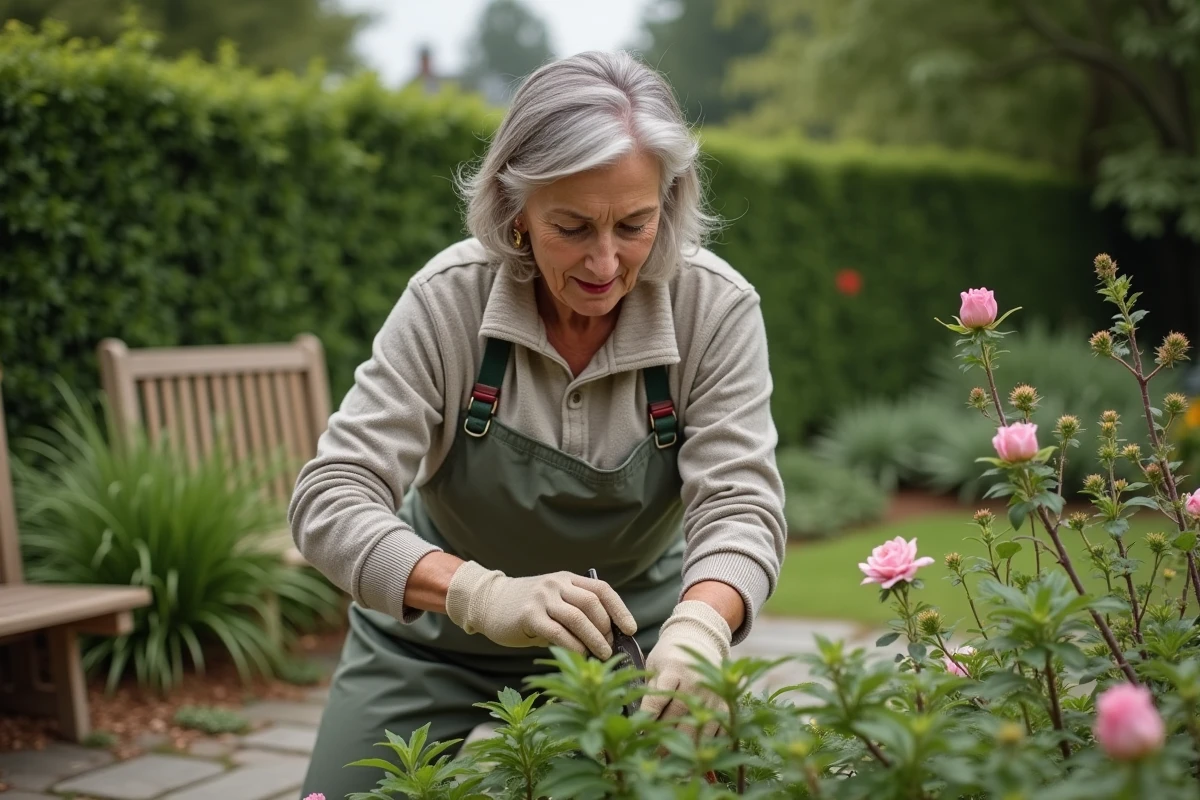
Maintenance, far from being a chore, is organized in sequences: appropriate pruning, mulching, compost application, care for accessories… This regular attention keeps the garden alive, welcoming to wildlife, and pleasant to live in regardless of the season. Imagine a robin inspecting the flower beds in winter, a bee foraging at the first rays of March, or the coolness of a shaded corner on an August day. That is the reward of a garden designed to last, season after season.