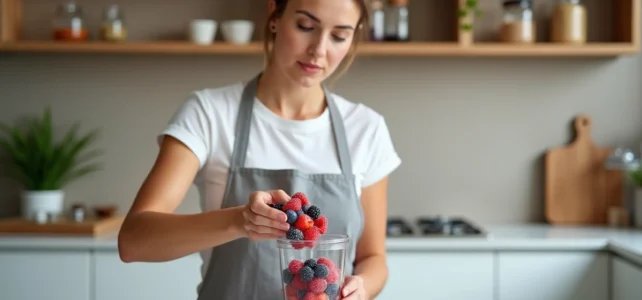
A bag of frozen fruit taken out of the freezer, poured directly into the Nutribullet bowl, and the motor struggling: we’ve all experienced this scene. The problem lies neither with the device nor the fruit, but with how we prepare the mixture before starting the blades. With a few simple adjustments, the Nutribullet transforms frozen fruit into creamy smoothies without straining the motor.
Order of filling the bowl: the constraint imposed by the Nutribullet
With most traditional blenders, you can load the ingredients in any order. The Nutribullet works differently: the bowl flips onto the base, and the blades end up on top. As a result, whatever you place last in the bowl comes into contact with the blades first.
Related reading : Practical tips for securely fixing pallets to the ground for your terrace
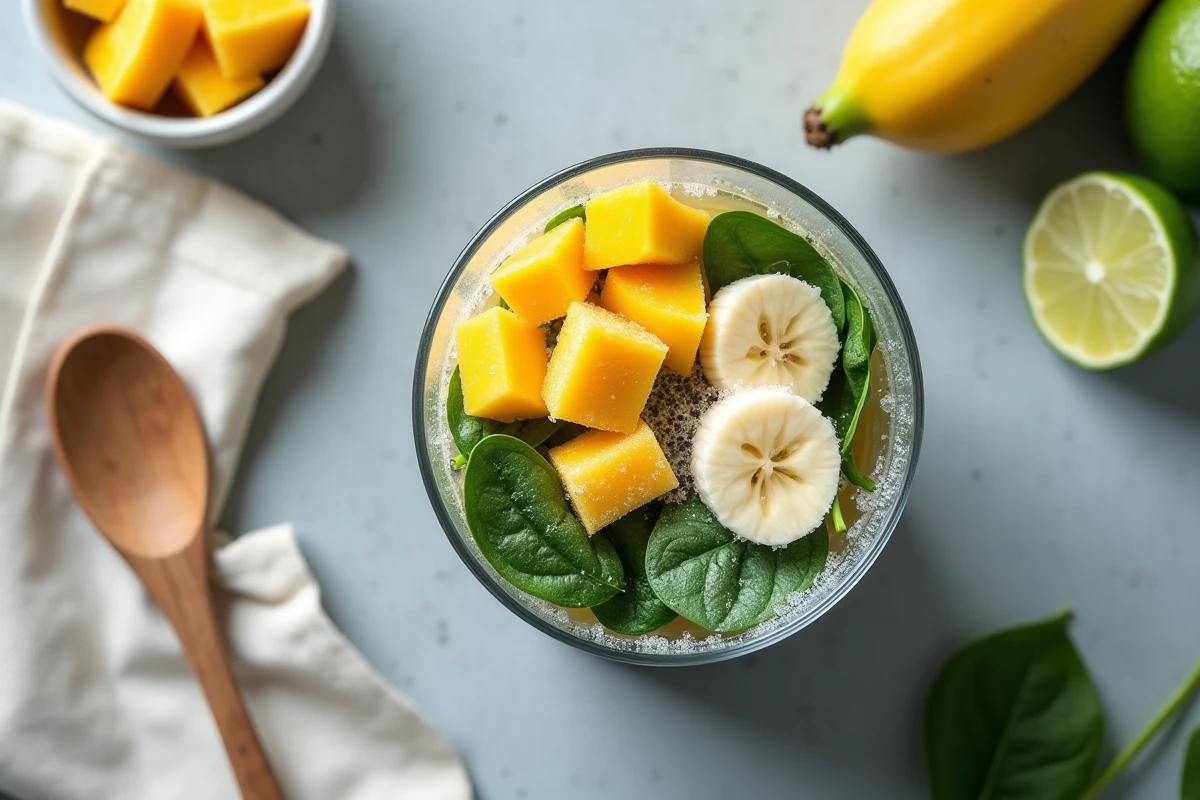
The loading logic is therefore reversed. You start with the liquid (water, plant milk, juice), then the soft or powdered ingredients, and the frozen fruit goes in last in the bowl. When you flip the whole thing, the frozen pieces fall directly onto the blades while the liquid flows down to them by gravity.
If you do the opposite, the frozen fruit remains compacted at the bottom (which becomes the top after flipping), and the blades stir the liquid without reaching the hard pieces. You end up with a screeching noise, a heterogeneous mixture, and sometimes a complete motor blockage. By following Gourmandel’s tips, you can find a clear summary of this filling order adapted to different models.
Read also : Essential Tips for Succeeding and Growing Your Freelance Business in 2024
Partial thawing of frozen fruit before blending
Blending fruit taken directly from the freezer puts a strain on the blades and motor far beyond what is necessary. A resting time of a few minutes at room temperature radically changes the texture of the result.
Finding the right stage of thawing
You’re looking for a state where the fruit is still very cold but the surface starts to soften. When you press a blueberry or a piece of mango between your fingers and it gives slightly without being mushy, that’s the right moment. A fruit still frosty on the surface but soft to the touch blends without excessive resistance.
The alternative when you’re short on time: cut large pieces (strawberries, chunks of pineapple) in half or thirds before putting them in the bowl. Reducing the size of the pieces compensates for the excess hardness and makes it easier for the blades to work.
Adjusting the amount of liquid
With frozen fruit, you need more liquid than with fresh fruit. The ice on the surface absorbs some of the available volume, and the mixture tends to remain compact around the blades. You aim for a liquid level that slightly exceeds half of the solid ingredients, without ever exceeding the maximum fill line of the bowl.
Ingredient combinations that make it easier for the blades
Some mixtures blend better than others in a Nutribullet loaded with frozen fruit. The final texture depends as much on the choice of complementary ingredients as on the power of the motor.
- A fatty ingredient (peanut butter, avocado, Greek yogurt) coats the frozen pieces and helps the blades pull the fruit into the vortex instead of letting them bounce against the walls
- A water-rich ingredient (cucumber, celery, fresh watermelon) increases the liquid volume without diluting the flavor as much as plain water
- Oats or chia seeds, added in small amounts, thicken the smoothie after blending and prevent a too-watery texture due to excess compensatory liquid
- Fresh bananas, even half a fruit, provide a creamy base that binds everything together and masks the residual graininess of poorly blended frozen fruit
On the other hand, blending several fruits with thick skins or long fibers (fibrous mango, pineapple) while they are still very frozen often produces a grainy result. It’s better to choose just one and pair it with softer frozen fruits like blueberries or raspberries.
Protecting the Nutribullet motor with hard fruits
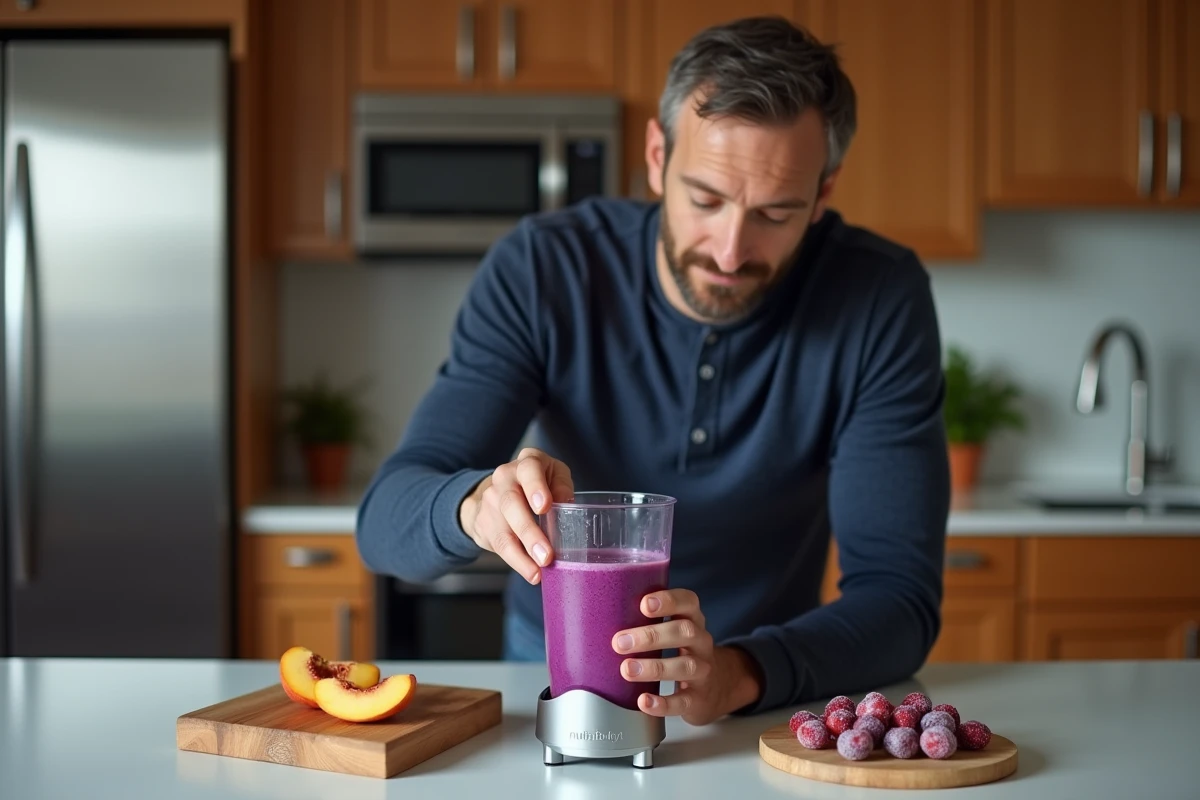
The Nutribullet is not a professional kitchen robot. Its blades and motor are designed for ingredients that blend in just a few seconds. When using frozen fruit regularly, a few precautions can extend the device’s lifespan.
Never start a continuous cycle of more than one minute. Blending in short bursts, shaking the bowl slightly between each pulse, allows trapped pieces to fall back toward the blades. Do three to four cycles of a few seconds rather than one long cycle where the motor heats up.
If the mixture doesn’t move down toward the blades despite shaking, the reflex should be to remove the bowl, add a bit of liquid, and remix. Forcing it by blending longer doesn’t solve anything and can damage the blades or the base.
- Filling the bowl to maximum capacity with frozen fruit is a common mistake: keeping a quarter of the bowl empty leaves enough space for the vortex to form
- Alternating a frozen fruit and a soft ingredient in the filling layers reduces compact blocks that resist the blades
- Check the condition of the blades every few weeks: dull blades compensate with motor strength, which accelerates wear
Frozen smoothie recipes suitable for the Nutribullet
Rather than complete recipes, here are two bases that consistently work with this device and frozen fruit.
Tropical creamy base
Coconut milk first in the bowl, a spoonful of peanut butter, then slightly thawed chunks of frozen mango and pineapple. The fat from the coconut and peanut butter creates a powerful binder. Three short pulses are enough to achieve a thick sorbet texture.
Express red fruit base
Plain yogurt or oat milk, half a fresh banana, then a mix of frozen blueberries, raspberries, and strawberries. Frozen red fruits are among the easiest to blend because their cell structure bursts quickly under the blades. You get a smooth smoothie in two cycles.
The most common mistake with frozen fruit in a Nutribullet remains treating the device like a high-power blender. By adjusting the filling order, the amount of liquid, and the blending time in pulses, you can get the best out of these ingredients without prematurely wearing out the motor. Red fruits and chopped tropical fruits are the best allies of this small kitchen appliance.